
Heterotopias is a design-research project that explores the cruise ship as an architectural and socio-cultural “information bubble”. A heterotopic space that reflects society on land. Through fieldwork, interviews, archival research, and research-through-drawing, the project examines how cruise ships function simultaneously as spectacle, workplace, home, and memory machine. Working with maritime institutions in Rotterdam and in close collaboration with a retired seaman on board the ss Rotterdam, the research maps visible and invisible structures of life at sea. From hierarchies and labor below deck to ports, shipyards, and deconstruction sites on land. Using tools such as photogrammetry, LiDAR, scaled models, and speculative drawing, the project treats design itself as a method of inquiry, producing new ways of understanding and representing the ship. By translating data and lived experience into a new aesthetic paradigm, the project offers a social critique of the cruise liner as a floating world within worlds. Will the ship become the new sanctuary of the future or will it simply function to act as a haven for retired seamen, enabling what remains of the past to be cast back into the world? Togehter with Blise Orr
2025
Public Installation
ss Rotterdam

Made of brushed stainless steel, with two polished reflective surfaces. These surfaces are oriented in such a way that, from within the kitchen, both the garden and the sky become visible. The object is designed as an observation tool, enabling extended perspectives during everyday kitchen activities.
2025
Furniture Design
Maastricht

The kitchen design is focused on future-proofing a compact kitchen space within the extension of a house originally constructed around 1900. In the early 20th century, pantry storage was traditionally relegated to the basement, separating it from the main kitchen area. This contemporary approach redefines that layout by integrating pantry storage within the kitchen itself, improving accessibility and functionality for modern living. The design emphasizes the symbiosis between the kitchen and its users, where daily use and practical needs inform the layout. Typical of this kitchen is the abundance of displayed objects, such as clocks, which have taken on a life of their own over time. Although the design appears minimalist due to its newness, it still incorporates these objects. However, only time will reveal how the space and its objects will evolve into a detailed reflection of their personality.
2024
Kitchen Design
Maastricht

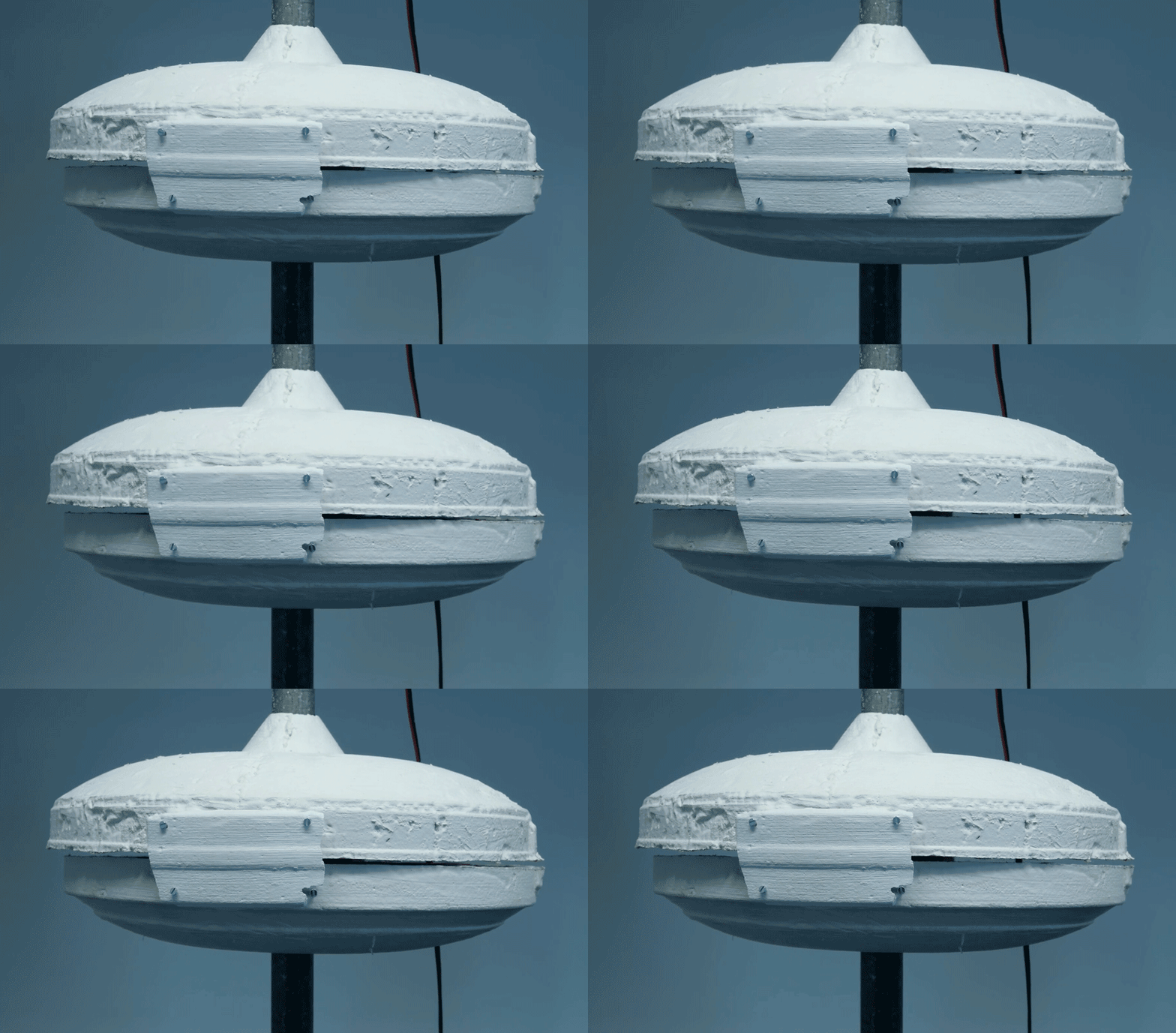
The Dutch public siren, with its retro-futuristic design and concealed technology, exemplifies the convergence of sound and architecture. It serves not just as a functional safety device, but as a tool of spatial governance, altering our movements within urban environments. The siren's presence, while visually understated, exerts a profound influence on how spaces are navigated and experienced, reminding us of the latent power embedded in these systems. This interplay between sound and architecture raises critical questions about the ways in which such devices enforce order and discipline, subtly dictating behavior through their invisible yet pervasive influence. The ruin-like installation in the current experiment furthers this exploration by manipulating the siren's frequency, prompting us to consider the long-term implications of such systems on our built environments, where the marks and traces of sound may lead to unforeseen consequences, including the potential for self-destruction. Photos by Chiara Catalini
2023
Installation
Nieuwe Instituut / Piet Zwart Institute
Inspired by this exhibition’s title, In Vitro, its scenography draws inspiration from test tubes, where the glass both protects the contents and provides a monitoring window for inspecting said contents. In this context, test tubes are not only allied with the pursuit of knowledge, but they also signify the unravelling of mysteries and the relentless drive to expand human capabilities and understanding. Furthermore, test tubes symbolise the world’s fragility and the need for meticulous research in addressing the complex challenges of our time. The scenography spatially conveys and expands upon the concepts associated with the monitoring window. It also merges the phenomenology of the test tube with the look of one-way mirrors, widely depicted in popular culture as authoritarian interrogation room fixtures. Themes of potential surveillance, the manipulation of our perception of space through reflections, and the curiosity about what lies beyond the window are central elements that contributed to this exhibition’s design.
2024
Scenography and Spatial Design
Bureau Europa

The title of the exhibition is humorously derived from the building guidelines, which regulate the use of live uncontained materials in gallery exhibitions, as a protective measure for the archives and exhibition spaces below. The exhibition becomes a mediator that explores the subtleties of the threshold between alive and non-alive. These works transform the gallery space into one in which everything inside is allowed to shift, change, rot, or regrow with time. In doing so, Anything that is alive cannot be in the gallery space asks what is given the agency of being alive?
2023
Visual Identity
Nieuwe Instituut

The scenography and spatial design aim to play with architecture as a medium that interacts with sound, experimenting with how architectural spaces can shape and enhance auditory experiences and vice versa. Its design challenges the conventional understanding of sound and space, prompting us to reconsider the physical borders that are often designed to separate indoor from outdoor atmospheres. It draws inspiration not only from music studios and amphitheaters, often regarded as the ultimate acoustic spaces for recording and producing sound, but also from the concept of synesthesia and the design of studio monitor casings.
2023
Scenography and Spatial Design
Bureau Europa

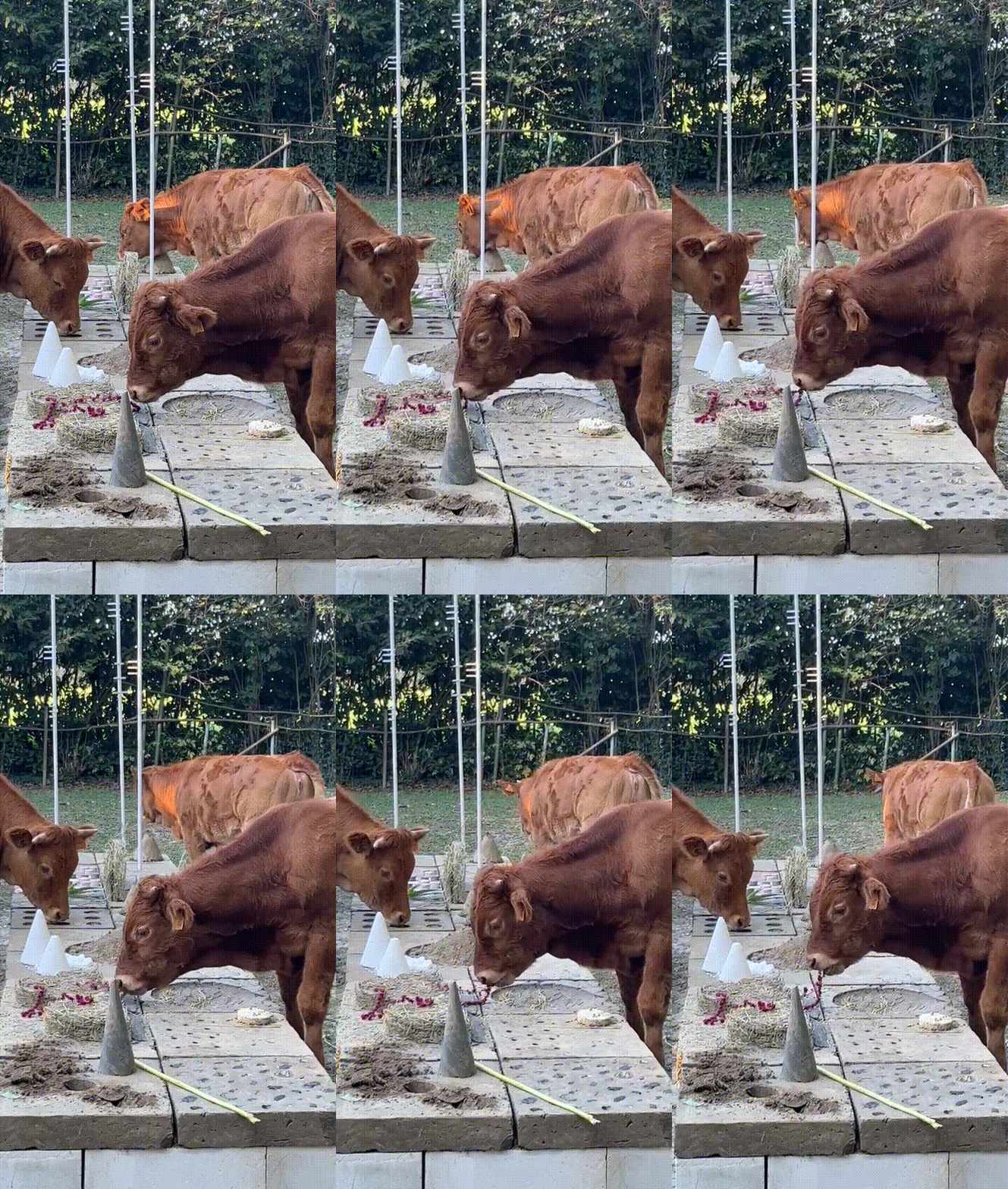
Domestic Territories is an ongoing design research exploring new relations, spaces, and forms of encounter between humans, other animals, plants, and minerals. The three-day workshop was dedicated to 1:1 collective prototyping through the use and re-use of available materials and tools at Ca'del Biondo, a historical farm in the Boschetto area of Cremona, Italy. Within the framework of the Master Interior Architecture: Research + Design (MIARD) program, in collaboration with Studio Ossidiana, a platform for a multi-species lunch was developed. Hay, soil, and lumber were chosen as the main materials with the intention for the platform to remain in the garden after the workshop, evolving, becoming overgrown, and used by various human and non-human visitors.The three days concluded with people and cows at Ca’ del Biondo gathering in the garden to share a meal. Bread, cheese, tomatoes harvested from the garden, grapes, hay, salt sculptures for licking, and weeds were prepared for both invited guests and unexpected visitors.
2022
Workshop
Ca'del Biondo, Cremona
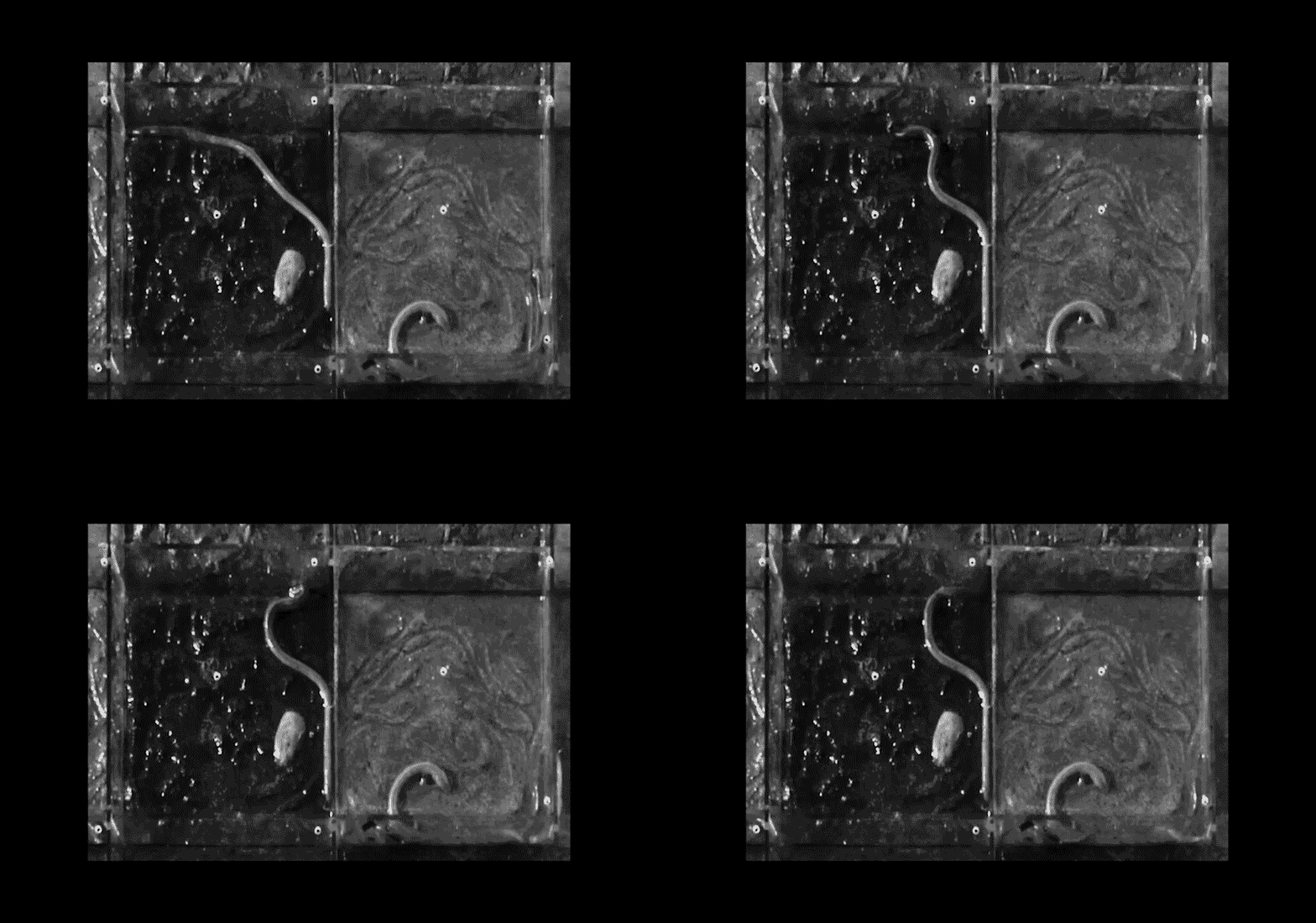
Terraria Subterraneus is a collection of terraria that encourages building new relationships with subterranean ecosystems. The world‘s largest land reclamation project, Flevoland, acted as the main context of investigation and is often illustrated as the ultimate terrarium. A human attempt to recreate a ‘natural’ environment where flora, fauna, and matter have been added and maintained, distributed, and manipulated to create profitable land. Our work aims to highlight the importance of soil for all living species while addressing some of humankind‘s feelings towards the underground, feelings of uncertainty, fear, suspicion, and disgust. Considering, not only Flevoland but the world as the ultimate terrarium, we can reconsider on a planetary scale what distorting our everyday senses might provoke. Experiencing the complexity of soil is vital, but recognition of its vulnerability is even more so.
2022
Installation
Piet Zwart Institute
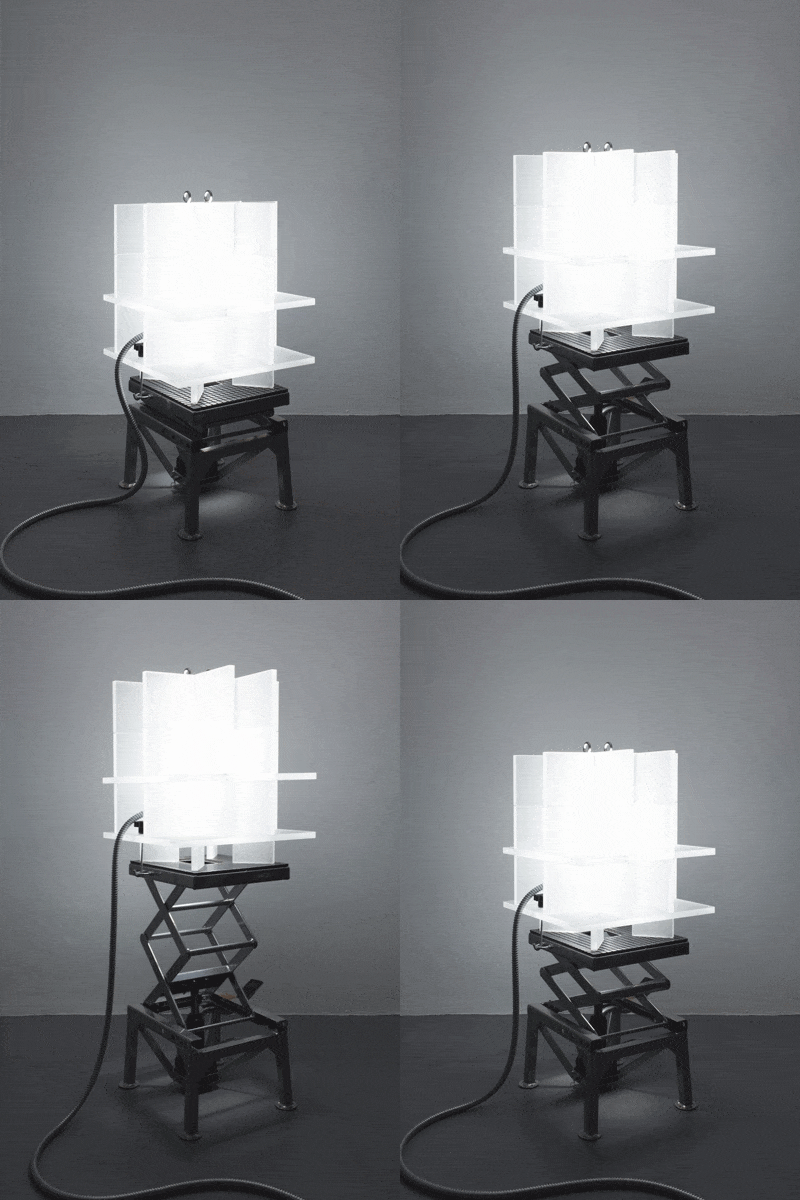
Playfull experiments with materials, function, and light. The design materialized as a sculptural "collage" featuring a chrome-coated motorcycle lift and a plexiglass framework that channels and reflects light from all angles. We intentionally question conventional definitions of purpose and utility, allowing the design to be flexible in height and space utilization. This design aims to stimulate interactions between objects and observers, and its use invites participants to explore, engage, and display.
2021
Furniture Design
Maastricht
A story that aims to embrace polystyrene packaging as a resource to explore spatial relations within themselves and the global context by manipulating and archiving their forms digitally. By looking differently at these 29 selected objects, they become an investigation into the origin, architecture, geology, representation, and value of this form of industrialization. The polystyrene represented as three ruin-like sites engage with these ideas. It prompts us to question how we consume electronic devices within a global socio-political context. By using the packaging material that typically gets discarded, the work reverses our attitude towards these extinguishing forms and materials. All 29 polystyrene objects are carefully scanned and documented with multiple techniques to unravel the role in space and time in which these objects exist and are created by the value we place upon them as a society.
2021
Installation
Rotterdam

This project focuses on the spatial and social analysis of the area north of Boschstraat in Maastricht. This area has undergone significant changes with the construction of a new pop stage, the relocation of the Noorderbrug, and the demolition of the original hotel ‘de Ossekop,’ which once housed a local cultural movement. Consequently, one could argue that the location where these institutionalized architectural interventions took place has become disconnected from its identity. The research emphasizes exploring the phenomenon of urban alienation, urban porosity, and the social and cultural entities that were associated with this specific place. The mirror image of the former De Ossekop building poetically criticizes the local Maastricht government's role in reshaping the area. This reflection serves as a metaphor for how urban transformations can often obscure or erase the historical and cultural identities of a place, highlighting the tension between curated processes and preservation. Ultimately, it raises questions about the consequences of such interventions and the impact they have on the social fabric and collective memory of a community.
2020
Architecture
Maastricht

The In-between proposes reshaping an existing lot near a former medieval canal, now a bustling street in the center of Maastricht (Grote Gracht), into a multipurpose public workshop with residence. In this design, the intention is to use the residence as a showroom to the outside by reconstructing the building's facade with a two-story glass showcase, allowing for greater transparency and connection between the inside public and the outside street. The ceilings of the rooms are angled to enhance the sense of depth when viewing the interior of the building. This design choice also serves a functional purpose, providing an optimal position for a projector screen, allowing for uninterrupted film displays from both sides of the screen.
2019
Architecture
Maastricht

A prototype to showcase how artificial light and reflective surfaces can influence a space. By carefully arranging the furniture in relation to a light source and using reflective materials, it is possible to control the interplay between light and surfaces to generate alternative and flexible spatial tendencies.
2019
Furniture Design
Maastricht
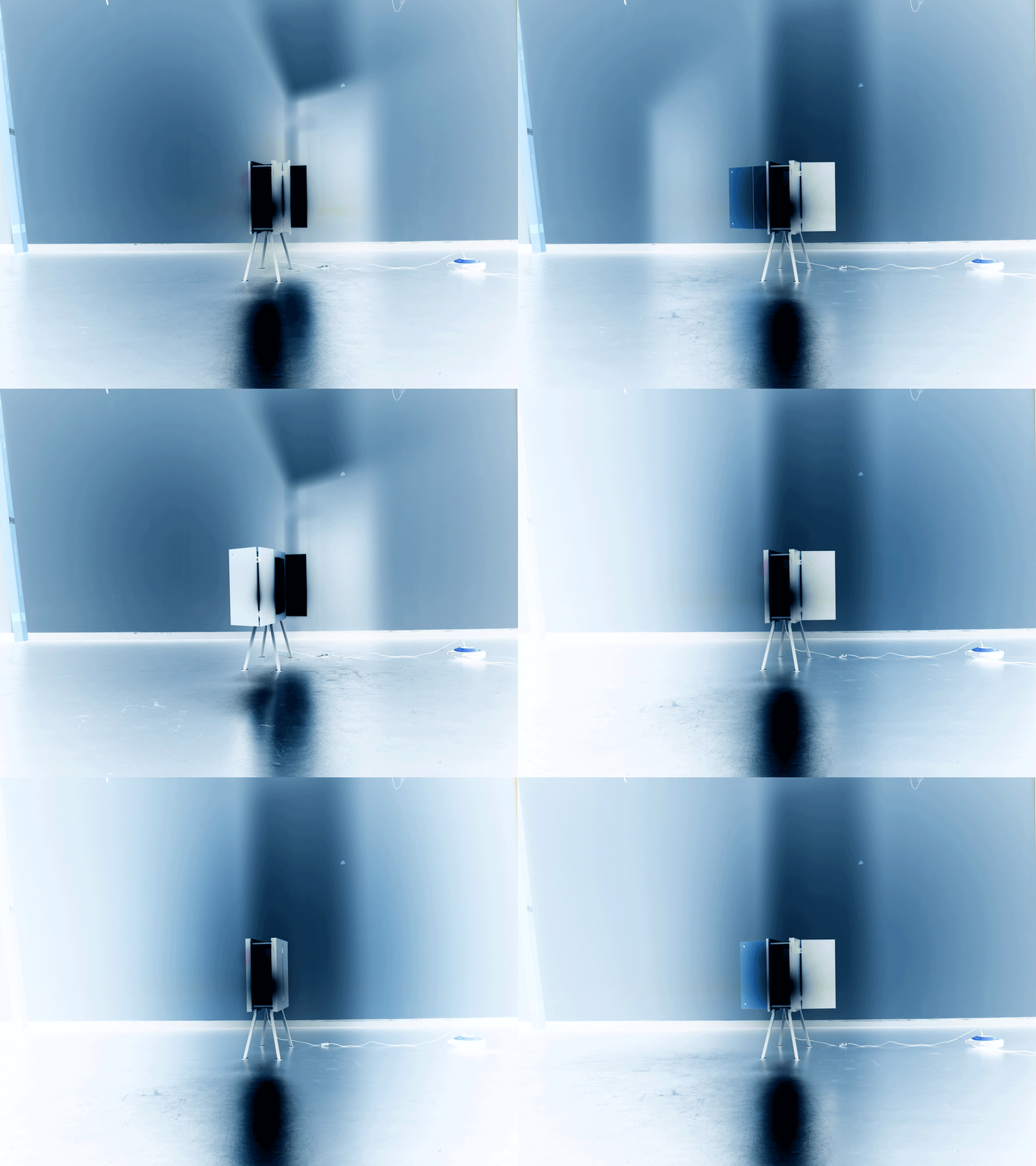
Wittevrouwenveld (sometimes abbreviated WVV), was originally part of the Wittevrouwen convent. It served at the time as a refuge for papally approved penitent sisters. Wittevrouwenveld is currently a residential neighbourhood within the Dutch city of Maastricht. From around 150 years ago onwards Wittevrouwenveld used to be known as a typical working-class neighbourhood. Due to the completion of the Koning Willem-Alexander tunnel and the associated projects above ground, the neighbourhood is undergoing major transformations. This short documentary offers a critical reflection on these ongoing transformations, capturing details of the neighborhood's daily life. Through carefully framed scenes that deliberately exclude people, the film hints at the impact of urban development on the community's atmosphere and identity.
2018
Research Documentary
Maastricht
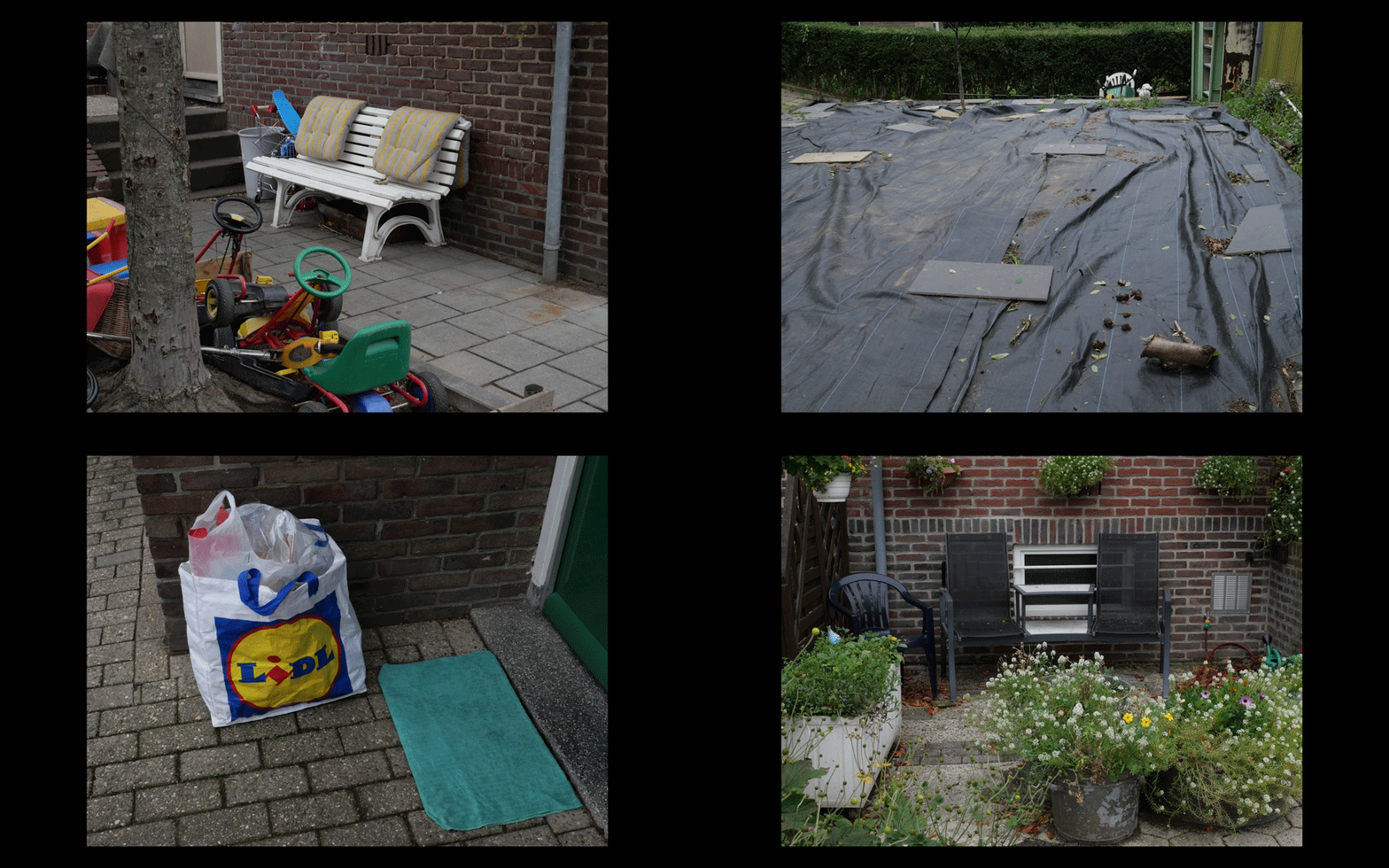
The workshop focuses on an architectural intervention of the repurposed legacy of the former ‘Société Céramique’ factory in Maastricht, now part of the Ceramique urban area. This (masterplan) area, developed from 1987 onwards under Professor Jo Coenen, features office and residential buildings by renowned architects like Aldo Rossi, Mario Botta, Álvaro Siza, and Herman Hertzberger. Although most of the original factory structures have been demolished, remnants like the ‘Wiebengahal’ and ‘Bordenhal’ remain. Among these remnants are 38 cast iron columns that have been stored for nearly thirty years, awaiting a new purpose. The workshop explores the potential of reusing this cultural heritage through a concept called ‘re-translocation.’ The area feels overly planned, leaving little space for alternative possibilities. This contrast inspired us to introduce intentional disruption—a whimsical, ephemeral architectural experiment that challenges the rigidity and permanence of the existing urban design. Instead of creating structures meant to last, they propose a counter-statement to traditional architecture, questioning the need for permanence in public spaces.
2018
Workshop
Maastricht

The modular configuration of this design enables it to be flexible and adjust itself to varying needs and requirements. While the design is exemplified within the context of Maastricht, its applicability extends to a wide range of locations. Fundamentally, the design prioritizes adaptability in room utilization without compromising on the presence of natural light. The community, designed for this specific area, has the capacity to house approximately 130 individuals. Its composition chiefly comprises a variety of residential units, accompanied by a sizable greenhouse, a communal area for dining and culinary activities, a laundry facility, an information center, a medical office, a retail space, and a sheltered area for bicycles with a workshop. The architecture spans two levels, facilitating the formation of communal areas that are publicly accessible and amenable to evolving user necessities.
2018
Architecture
Maastricht
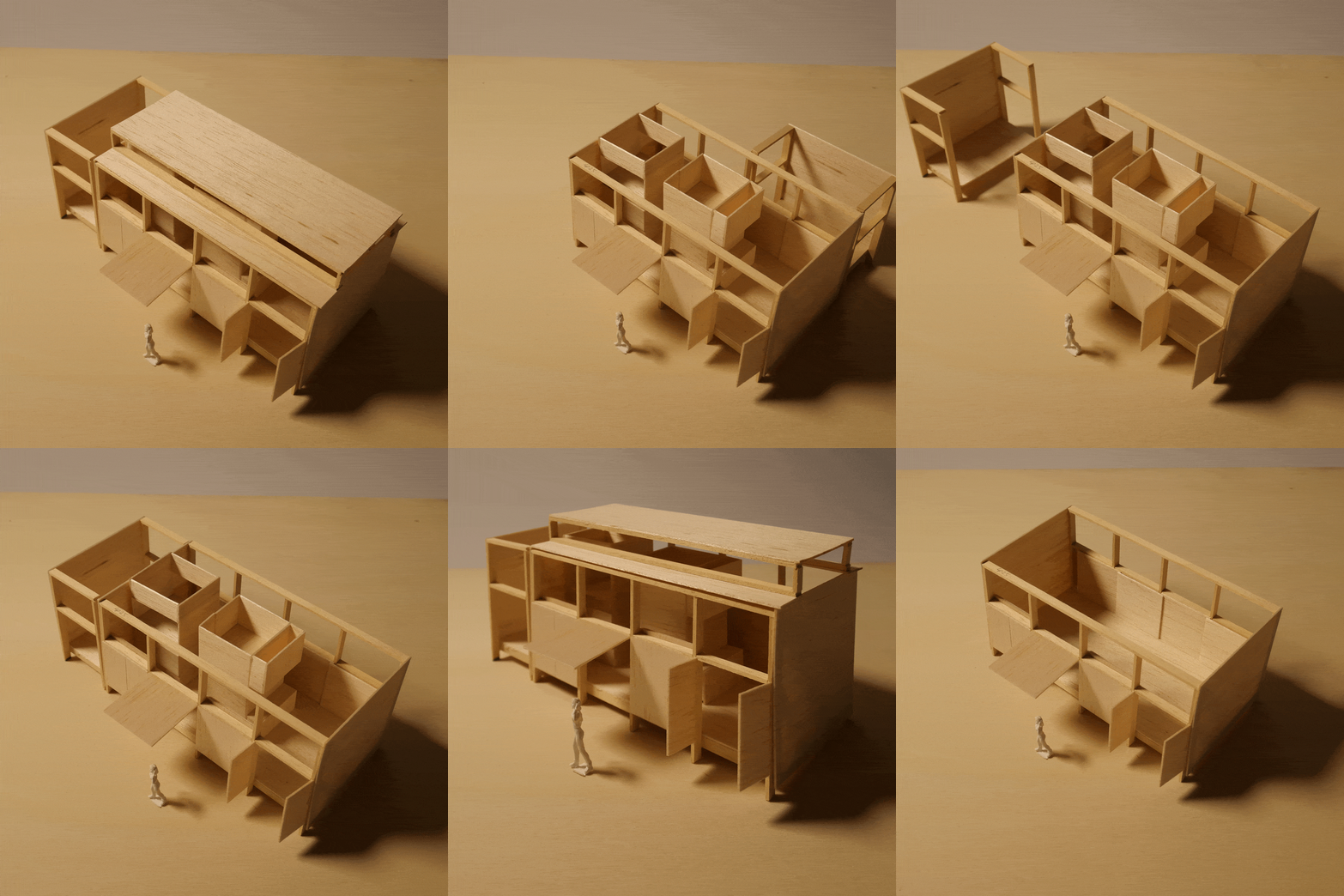
A photo collection that explores the relationship between urban landscapes and public spaces, highlighting the significant impact of their (lack of) engagement on city dynamics. Through a series of photographs from cities such as Brussels, Heerlen, Liège, and Maastricht, the project aims to narrate the alienation within these urban settings, reflecting an anonymity between people and their built surroundings. The images are microcosms of broader urban experiences, prompting us to consider the implications of urban design choices on our daily lives and the sense of interacting in these environments.
2017
Photography
Maastricht

Daniël de Jong
Architectural Research
and Design
Spatial Enterprise
Korfmakersstraat 129b
3026 XG, Rotterdam
Btw nr: NL 0036 8944 5B11
Kvk nr: 8247 6241